Healthy Blood Sugar Support Cheat Sheet for Everyday Meals
A blood sugar reset is not a detox or a promise of perfectly flat glucose. It is a repeatable routine: choose minimally processed foods, pair carbohydrates with protein or fat, eat vegetables and protein before starches, begin with a protein-forward meal, move after eating, and personalize fasting or supplements with professional guidance.
What a blood sugar support routine actually looks like
Mid-afternoon slumps and sudden cravings can make steady energy feel complicated. This cheat sheet keeps the routine simple without pretending that every dip in energy is caused by blood sugar or that one food must be eliminated.
The aim is to build meals and habits that support a healthy blood sugar support routine: more minimally processed foods, balanced meal composition, a practical eating order, movement after meals, adequate sleep and a routine you can repeat.
"Blood sugar support shouldn't mean overhauling your life. The point is a routine you can repeat — a strip before the meal, protein first, a short walk after."
— Joanna Bacchus, Certified Nutritional Advisor and Founder, BIOSTRIPS®
What are the best food swaps for blood sugar support?
Use these as convenient options, not rigid rules. Whole, minimally processed foods usually make it easier to combine fibre, protein and satisfying fats. These healthy food swaps keep meals abundant, not restrictive.
| Swap this | Try this |
|---|---|
| White rice | Cauliflower rice or quinoa |
| Sugary cereal | Eggs, turkey sausage and vegetables |
| Juice or soda | Water infused with lemon and mint |
| Pasta | Zucchini noodles or lentil pasta |
| Pastries | Greek yogurt with chia and berries |
How do you build a before, during and after meal routine?
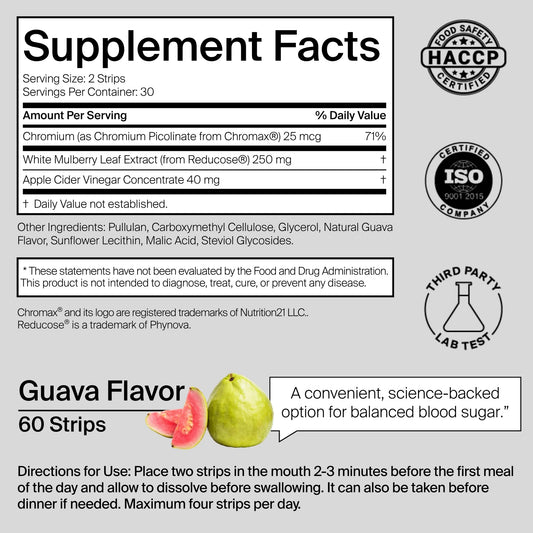
- Before: For general metabolic support, follow the current BIOSTRIPS® Glucose Support directions by taking two strips 2 to 3 minutes before a meal. Diluted apple cider vinegar is another option discussed in research, but it can irritate reflux or teeth and may interact with medication.
- During: Eating vegetables and protein before carbohydrate foods may reduce the post-meal glucose rise in some study populations. You do not need to separate every food perfectly; begin with vegetables, then protein, and finish with the main starch when practical.
- After: A 10 to 15-minute post-meal walk is an achievable movement option. The study often cited involved older adults at risk for glucose intolerance, so treat walking as a supportive habit rather than a guaranteed percentage reduction.
Make the first meal protein-forward
Research has tested breakfasts containing about 30 to 39 grams of protein. Choose an amount that fits your appetite and needs. Options for a protein-forward breakfast include eggs with smoked salmon and avocado, a chicken-sausage spinach omelet, a protein smoothie with chia and greens, or turkey patties with vegetables.
Having coffee after food may feel better for some people, but it is a preference, not a proven requirement for preventing a cortisol spike.
How should you handle fasting and carbs?
A 12 to 14-hour overnight eating break may suit some adults. Evidence on time-restricted eating and female reproductive hormones remains limited, and there is no established rule that fasting must be synced to the follicular or luteal phase. Do not fast when pregnant, underweight, recovering from an eating disorder, prone to hypoglycaemia or advised against it medically.
Break an overnight fast with protein, healthy fat and fibre when possible. Carbohydrates do not need to be forbidden; portion, type and what you eat with them matter.
| Build meals with | Use less often or personalize |
|---|---|
| Healthy fats: avocado, olive oil, fatty fish | Refined carbohydrates: white bread, pastries and frequent refined pasta portions |
| Fibre-rich vegetables: broccoli, kale, spinach | Sugary drinks: soda and fruit juice |
| Proteins: eggs, chicken, tofu | Frequent fried foods |
| Herbs and spices: cinnamon, ginger, turmeric | Pineapple, watermelon and banana can raise glucose faster for some people, but whole fruit does not need to be banned; portion and pairing matter |
| Nuts and seeds: almonds, chia, flaxseeds | Highly restrictive food rules that are difficult to sustain |
What does a morning, midday and evening routine look like?
Use the day as a simple three-part rhythm to support healthy carbohydrate metabolism:
| Time | Routine |
|---|---|
| Morning | Start with water. Lemon and a small pinch of salt are optional if appropriate for you. Baking soda is not required and should not become a daily wellness habit without medical guidance. Eat a protein-forward first meal, and delay coffee only when that feels better. |
| Midday | Prioritize protein and healthy fats at lunch. Pair carbohydrate foods with greens, vegetables or another fibre source rather than eating them alone when possible. |
| Evening | Take two BIOSTRIPS® Glucose Support strips 2 to 3 minutes before dinner when using the product, then walk for 10 to 15 minutes after the meal when comfortable. |
Which glucose support option fits the pre-meal step?
For the "before" step, BIOSTRIPS® Glucose Support is built for exactly this window. A serving is two sugar-free, vegan strips taken 2 to 3 minutes before a meal — no water, no capsules. The formula pairs Reducose®, a patented white mulberry leaf extract studied in three randomized controlled trials at 250 mg, with Chromax® chromium picolinate. Compared with diluted apple cider vinegar, it delivers a consistent dose without the reflux, enamel or measuring hassle. It supports a routine, not a cure — pair it with the meal order and post-meal walk above.
Shop BIOSTRIPS® Glucose Support →
Frequently Asked Questions
What does a blood sugar reset actually mean?
It does not mean detoxing glucose or curing insulin resistance. A practical reset means simplifying meals and repeating supportive habits: fibre-rich foods, protein, satisfying fats, a thoughtful meal order, movement after eating, adequate sleep and appropriately supervised supplements or medication when needed.
Do I need 30 to 40 grams of protein at breakfast?
No single target suits everyone. Research has tested breakfasts containing roughly 30 to 39 grams of protein, but needs vary with body size, age, appetite, activity and medical goals. Use a protein-forward first meal and personalize the amount with a qualified professional when necessary.
What's the difference between apple cider vinegar and Glucose Support?
They are different options, not interchangeable treatments. Follow BIOSTRIPS® label directions for Glucose Support. Vinegar should always be diluted and may worsen reflux, affect teeth or interact with medication. Anyone using glucose-lowering medication should discuss either pre-meal option with a healthcare professional.
Should women sync intermittent fasting with their cycle?
There is not enough evidence to prescribe follicular-phase fasting or shorter luteal-phase windows as a universal rule. A gentle 12 to 14-hour overnight break may suit some adults, but energy, cycle regularity, pregnancy plans, medication, eating-disorder history and symptoms should guide the decision.
Who should personalize this plan with a clinician?
Anyone using glucose-lowering medication or managing a diagnosed blood-sugar condition should follow individualized medical guidance rather than relying on a general wellness routine. Professional guidance is also appropriate during pregnancy or breastfeeding, with kidney disease, an eating-disorder history, unexplained fatigue or medication-sensitive conditions.
Final Takeaway
Blood sugar support should feel practical, not punishing. Keep the five swaps, before-during-after meal routine, protein-forward first meal, flexible food list and morning-midday-evening rhythm. Use fasting only when it suits your health, and follow the current BIOSTRIPS® directions rather than outdated timing. Small habits support consistency; they do not replace diagnosis or treatment.
This article is educational and is not intended to diagnose, treat, cure or prevent disease. It is not a substitute for individualized medical or professional nutrition care.
Sources
- BIOSTRIPS® product directions: Glucose Support product.
- Protein-forward breakfast: PMID 25889354
- Vinegar and meal response: PMID 14694010; PMID 20068289
- Meal order: PMID 30101510; PMC7398578; PMID 28989726
- Post-meal movement: PMID 23761134; PMC3781561
- Time-restricted eating and female hormones: PMID 39320714; PMID 35684143; PMC9182756
Research note: Nutrition and ingredient studies do not establish that a finished supplement treats diabetes, insulin resistance or any disease. Follow the current label and seek professional review for medication-sensitive decisions.
BIOSTRIPS® is a category-defining brand in oral dissolving nutrient strips, founded in 2019 by Certified Nutritional Advisor Joanna Bacchus. A brand of Elsantis US Inc., BIOSTRIPS brought its first strips to market in 2022 and develops sugar-free, vegan formulations using clinically studied, branded ingredients. Learn more at joannabacchus.com.
This statement has not been evaluated by the Food and Drug Administration. This product is not intended to diagnose, treat, cure, or prevent any disease.