GLP-1 Supplements: Complete Nutrition Guide | BIOSTRIPS®
TL;DR
- There is no mandatory GLP-1 supplement stack. Nutrition needs depend on food intake, symptoms, laboratory results, medicines and personal history.
- Prioritize protein, enough total food, gradual fiber, fluids and symptom review before adding several products at once.
- Supplements can address a specific documented need. They should not replace prescription care or be assumed safe simply because they are sold over the counter.
What Does GLP-1 Companion Nutrition Mean?
GLP-1 companion nutrition is the food, hydration, movement, symptom management and appropriately selected supplementation that surround prescription treatment. It is not a replacement for the medicine, a way to change a prescribed dose or a promise that one supplement will solve appetite or digestive changes.
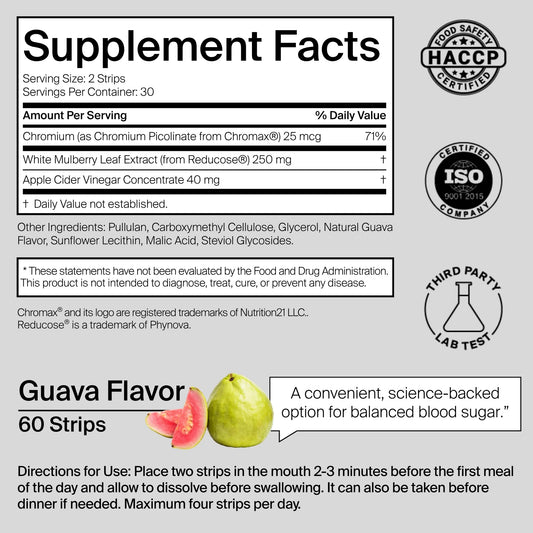
For people who want meal-specific carbohydrate support, BIOSTRIPS® Glucose Support is a berberine-free oral dissolving strip built on Reducose® white mulberry leaf extract and Chromax® chromium. It has not been studied with GLP-1 medicines; see where it fits below.
The most useful question is not “What should every GLP-1 user take?” It is “What has changed in my routine, and what specific need should be addressed?” That framing keeps food first and makes a supplement decision easier to evaluate with a clinician or pharmacist.
Why Do Smaller Meals Need More Planning?
Semaglutide and tirzepatide can delay gastric emptying. Their prescribing information warns that this may affect oral medicines and identifies gastrointestinal adverse reactions such as nausea, vomiting, diarrhea, abdominal pain and constipation. [1,2] The experience varies by medicine, dose, time on treatment and individual tolerance.
The immediate issue is often practical. A breakfast that once supported a full vitamin routine may become half a piece of toast. A large fiber drink can feel like another meal. Iron on an empty stomach may be harder to tolerate. None of this proves that oral supplements stop working. It means product, dose, timing and food intake may need review.
Tirzepatide has medication-specific guidance for oral hormonal contraceptives during treatment initiation and dose escalation. Follow the current product label and consult the prescriber or pharmacist about any medicine whose timing matters. [2]

How Do You Protect Nutrition When Meals Get Smaller?
Protein and total nourishment
Weight change can include lean tissue as well as fat mass. Start small meals with a protein source that feels manageable, such as eggs, fish, Greek yogurt, cottage cheese, tofu, beans, lentils or a suitable protein drink. The right amount depends on body size, activity, kidney function and medical history. A registered dietitian can personalize it.
Plants, fiber and fluids
Vegetables, fruit, legumes, whole grains, nuts and seeds provide fiber and micronutrients. Increase fiber gradually, because a large fiber supplement can worsen pressure, bloating or constipation when fluid intake is low. Smaller sips through the day or drinking more between meals may feel easier for people who become full quickly.
When food intake is very low
A few crackers may settle the stomach temporarily, but they are not a long-term nutrition plan. Aim for small combinations that deliver protein, plants, carbohydrates, fats and enough overall nourishment. Repeated vomiting, persistent diarrhea or inability to keep fluids down needs medical attention.

Do GLP-1 Users Develop Nutrient Gaps?
A GLP-1 medicine does not automatically remove nutrients from the body. The more likely concern is that sustained low intake, limited dietary variety, vomiting, diarrhea or a pre-existing deficiency can make it harder to meet nutrition needs.
In a retrospective claims analysis of 461,382 people newly prescribed GLP-1 receptor agonists, 12.7% had a diagnosed nutritional deficiency or deficiency-related complication within six months and 22.4% within 12 months. [3] This supports monitoring, not the assumption that every GLP-1 user will develop a deficiency or that the medicine directly caused every diagnosis. The study used claims data and included many people with type 2 diabetes.
| Area to review | Why it may matter | What to do first |
|---|---|---|
| Protein | Smaller portions may reduce intake | Review meals and tolerance before choosing a product |
| Iron, B12 and folate | Dietary variety, menstrual bleeding, metformin use and health history can matter | Use symptoms and testing to guide a decision [9] |
| Vitamin D and calcium | Food sources may become less frequent | Review food intake, history and laboratory results |
| Magnesium and fiber | Food pattern, fluids and bowel tolerance can change | Start with food sources and avoid aggressive increases [8] |
Persistent fatigue, weakness, dizziness, hair changes, heavy menstrual bleeding, very rapid weight change, a highly restricted diet or a reduced ability to eat and drink are reasons to seek clinical input rather than guessing which nutrient is missing.

Can Supplements Make GLP-1 Nausea Worse?
A supplement routine that felt easy before treatment may not feel the same afterward. Products that can create gastrointestinal friction for some people include iron, zinc, high-dose vitamin C, magnesium, concentrated botanicals, large fiber doses, large multivitamin capsules and products taken without food.
Change one variable at a time. If several new products are started together, it becomes difficult to identify which product, amount or timing is contributing to nausea or bowel changes.
- Eat smaller portions and stop at comfortable fullness.
- Sip fluids gradually and try drinking more between meals if drinking with food causes pressure.
- Choose familiar, lower-fat foods during difficult periods.
- Avoid lying down immediately after eating.
- Track symptoms after dose changes and contact the prescriber if they persist or worsen.
Ginger may help some forms of nausea, but it has not been established as a treatment for GLP-1-induced nausea. Do not use a supplement stack as a substitute for reviewing persistent symptoms with the prescribing team. [7]
Which Supplement Fits Which Need?
| If the need is | A possible starting point | Check first |
|---|---|---|
| Low protein intake | Protein-rich food, powder or ready-to-drink option | Total intake, kidney history and tolerance |
| Low fiber intake or constipation | Food-based fiber or psyllium | Fluids, nausea, medication timing and obstruction symptoms |
| Documented nutrient deficiency | The specific nutrient in an appropriate amount | Laboratory results, amount and duplication |
| Low dietary variety | A carefully selected multivitamin | Iron content and stomach tolerance |
| Meal-specific carbohydrate metabolism | Reducose® and chromium-based Glucose Support | Glucose-affecting medicines and clinician guidance |
| Interest in berberine | Only after an interaction review | Nausea, bowel symptoms, prescriptions and monitoring plan |
A multivitamin cannot replace protein, total energy, fiber or a varied diet. Individual vitamins and minerals should not be chosen simply because they appear on a generic online GLP-1 checklist.
Before purchasing a new product, read the Supplement Facts panel. Look for duplicate ingredients across a multivitamin, electrolyte product, beauty supplement and single-nutrient product. More is not automatically better, particularly for iron, zinc and fat-soluble vitamins. A pharmacist can help identify duplication and timing issues when prescriptions are involved.

Does Supplement Format Matter?
When appetite is low, another large capsule can feel like a lot. Powders, liquids, chewables and oral dissolving strips may feel more manageable. The best format still depends on the ingredient, the amount required, sugar content, tolerance and intended purpose.
Protein and fiber usually require meaningful serving sizes and may fit better into foods, drinks or powders. Some vitamins, minerals and standardized botanical ingredients may fit into a smaller format. Choose in this order: need, evidence, amount, interaction risk, tolerance and then format.
A format change can make a routine easier to maintain, but it does not make a product medically necessary or prove that it will address a symptom. If a capsule, powder or chewable triggers discomfort, ask whether the underlying issue is timing, the ingredient, the amount, food intake or the GLP-1 medicine itself before adding another product.

| Format | What it offers |
|---|---|
| Food | Whole-food source within meals and snacks |
| Powder | Can provide larger ingredient amounts, depending on formulation |
| Liquid | Alternative format where appropriate for the ingredient and individual |
| Chewable | Solid format with formulation-specific ingredient amounts |
| Oral dissolving | Thin oral format that can suit certain ingredients and formulations |
The format must fit the needed ingredient amount, formulation and individual tolerance.
Is Berberine Safe to Combine With a GLP-1?
Berberine is often promoted online for glucose and weight-related goals. That does not make it a default addition to a GLP-1 routine. Berberine can cause nausea, abdominal discomfort, constipation and diarrhea and may interact with medicines. [4]
There are insufficient controlled human trials establishing the safety or benefit of combining berberine with semaglutide or tirzepatide. That uncertainty is a reason to review the complete medication list, current digestive symptoms, insulin or sulfonylurea use, glucose monitoring plan and other supplements with a clinician or pharmacist.
Berberine is not a natural GLP-1 and should not be described as a replacement for prescription treatment. The right alternative depends on the actual goal. A documented nutrient need, low protein intake and meal-specific carbohydrate support are different problems with different solutions.
Where Does Meal-Time Carbohydrate Support Fit?
A GLP-1 can change appetite, but carbohydrates can still be part of real meals. Pasta, rice, bread, fruit or dessert do not disappear from a person’s life simply because appetite has changed. Pairing carbohydrates with protein, plants and satisfying fats can help create a more balanced meal. [10]
BIOSTRIPS® Glucose Support is a berberine-free option intended for use before a carbohydrate-containing meal. Each two-strip serving provides 250 mg of Reducose® white mulberry leaf extract standardized to 5% DNJ, 25 mcg of elemental chromium from Chromax®, and apple cider vinegar powder. It is sugar-free and vegan.
Take two oral dissolving strips two to three minutes before a carbohydrate-containing meal, according to the product directions. BIOSTRIPS® Glucose Support supports healthy carbohydrate metabolism and healthy blood sugar levels already within the normal range.*
In controlled Reducose® ingredient studies in healthy adults, 250 mg was associated with lower post-meal glucose and insulin responses under defined meal-test conditions. [5,6] These are ingredient findings, not results for the finished BIOSTRIPS® formula and not evidence in people using GLP-1 medicines. The publications report manufacturer involvement, which should be considered when interpreting the findings.
There are no adequate controlled trials of BIOSTRIPS® Glucose Support with semaglutide, tirzepatide or other GLP-1 medicines. Anyone using a glucose-affecting medicine, including insulin, sulfonylureas or metformin, should consult their prescriber or pharmacist before adding a glucose-affecting supplement.
*This statement has not been evaluated by the Food and Drug Administration. This product is not intended to diagnose, treat, cure, or prevent any disease.

When Should You Contact Your Prescriber?
Contact the prescribing team promptly when nausea is persistent, worsening or preventing adequate food and fluid intake. Seek urgent medical care for severe or persistent abdominal pain, repeated vomiting, inability to keep fluids down, fainting, confusion, severe weakness, blood or coffee-ground material in vomit, green vomit or signs of significant dehydration.
Do not start, stop, delay or change a GLP-1 dose based only on social media, a blog or advice from a supplement seller.
Frequently Asked Questions
What supplements should I take on a GLP-1?
There is no mandatory GLP-1 supplement stack. Start with enough food, protein, fiber-rich foods and fluids. Use dietary pattern, symptoms, medical history and laboratory testing to identify any specific need.
What nutrients do GLP-1 users need?
GLP-1 users need the same essential nutrients as other adults. Smaller portions can make adequate protein, iron, vitamin B12, folate, vitamin D, calcium, magnesium, fiber and total nourishment harder to obtain for some people.
What helps with nausea while taking a GLP-1?
Smaller portions, slower eating, gradual fluids and symptom tracking may help some people. Persistent or worsening nausea should be reviewed with the prescribing clinician. Do not assume a new supplement will fix medication-related nausea.
Can I take berberine with a GLP-1?
Berberine can cause gastrointestinal symptoms and may interact with medicines. Controlled evidence for combining it with semaglutide or tirzepatide is insufficient. Review the exact product and amount with a prescriber or pharmacist.
How can I support carbohydrate metabolism while on a GLP-1?
Follow the medication plan, build balanced meals and monitor glucose when instructed. BIOSTRIPS® Glucose Support supports healthy carbohydrate metabolism, but it has not been clinically studied with GLP-1 medicines.
What are pill-free supplements for GLP-1 users?
Pill-free options include liquids, powders, gummies, chewables and oral dissolving strips. The appropriate format depends on the ingredient amount, sugar content, tolerance and intended purpose.
What is GLP-1 companion nutrition?
GLP-1 companion nutrition is the food, hydration, movement, symptom management and appropriately selected supplementation surrounding prescription treatment. It supports daily nutrition routines without replacing or imitating the medication.
The Bottom Line
- There is no universal GLP-1 supplement stack.
- Protect protein, total nourishment, fiber and fluids before adding products.
- Use symptoms, food intake, health history and testing to identify specific needs.
- Review products that may be worsening nausea or bowel symptoms.
- Berberine needs a medication review, not an online recommendation.
- BIOSTRIPS® Glucose Support is a separate, meal-specific option that has not been studied with GLP-1 medicines.
- Talk with the prescribing team when symptoms limit food or fluid intake.
This content is for educational purposes only and is not medical advice. Do not start, stop or change prescription medication or clinician-directed supplementation without appropriate medical guidance.
References
- U.S. Food and Drug Administration. Wegovy semaglutide injection Prescribing Information. DailyMed.
- U.S. Food and Drug Administration. Zepbound tirzepatide injection Prescribing Information. DailyMed.
- Butsch WS, et al. Nutritional deficiencies and muscle loss in adults with type 2 diabetes using GLP-1 receptor agonists: a retrospective observational study. Obesity Pillars. 2025;15:100186.
- National Center for Complementary and Integrative Health. In the News: Berberine.
- Thondre PS, et al. Mulberry leaf extract improves glycaemic and insulinaemic response to sucrose in healthy subjects. Nutrition & Metabolism. 2021;18:41.
- Thondre PS, et al. Different doses of Reducose® mulberry leaf extract after a complex meal. Nutrients. 2024;16(11):1670.
- Gorgojo-Martínez JJ, et al. Clinical recommendations to manage gastrointestinal adverse events in patients treated with GLP-1 receptor agonists: A multidisciplinary expert consensus. Journal of Clinical Medicine. 2022;12(1):145.
- NIH Office of Dietary Supplements. Magnesium Fact Sheet for Health Professionals.
- NIH Office of Dietary Supplements. Iron Fact Sheet for Health Professionals.
- American Diabetes Association. Facilitating Positive Health Behaviors and Well-being to Improve Health Outcomes: Standards of Care in Diabetes. Diabetes Care.
About BIOSTRIPS®
BIOSTRIPS® is a category-defining brand in oral dissolving nutrient strips, founded in 2019 by Certified Nutritional Advisor Joanna Bacchus. A brand of Elsantis US Inc., BIOSTRIPS® brought its first strips to market in 2022 and develops sugar-free, vegan formulations using clinically studied, branded ingredients. Learn more at joannabacchus.com.