Perimenopause and Blood Sugar Complete Guide | BIOSTRIPS®
TL;DR
- Metabolism does not suddenly stop at 40, but estrogen changes, sleep disruption, muscle loss and a shift toward more abdominal fat can affect insulin sensitivity.
- Build meals around protein, fiber-rich plants and minimally processed carbohydrates. Limit added sugars and refined carbohydrates without banning entire food groups.
- Supplements can have narrow, evidence-specific roles. They do not replace medical assessment, nutrition, movement, sleep support or appropriate menopause care.
What Can Change During Perimenopause?
Perimenopause is the transition before menopause. Menopause is confirmed only after 12 consecutive months without a menstrual period. Timing varies widely, but many people begin noticing changes in their 40s.
Estrogen and progesterone can fluctuate during this transition. Those changes intersect with sleep, appetite, muscle, daily movement and body-fat distribution. Some people notice stronger cravings, less predictable hunger, interrupted sleep, fatigue after meals or a change in how familiar meals feel.
These experiences do not diagnose insulin resistance or diabetes. Fatigue, cravings and weight changes can also relate to anemia, thyroid conditions, sleep apnea, medications, stress, depression or inadequate nutrition. Testing and clinical assessment are more reliable than trying to interpret symptoms alone.
If periods are changing alongside symptoms, tracking sleep, hot flashes, cycle pattern, meals and energy for a few weeks can give a clinician more useful context. It is not a diagnostic tool, and it should not replace testing. It can help distinguish a broad pattern from a single difficult week and can make the next conversation more specific.
For meal-specific support, BIOSTRIPS® Glucose Support is a berberine-free oral dissolving strip built on Reducose® white mulberry leaf extract and Chromax® chromium, taken before carbohydrate-containing meals. It is not a menopause treatment; see where it fits below.

Does Metabolism Really Slow Down After 40?
Not in the simple way social media often suggests. A large analysis of energy expenditure across the human lifespan found that total and basal energy expenditure, after adjustment for fat-free mass, were relatively stable from approximately ages 20 to 60. [1]
What can change is the setting around metabolism: sleep may be disrupted, muscle can decline without strength training and adequate protein, daily movement can fall, and the menopause transition can change where fat is stored. In a longitudinal study, the women who became postmenopausal gained visceral fat, while age-related changes affected other fat stores across the group. [2]
That distinction matters. It keeps the focus on useful levers such as food quality, resistance exercise, sleep, symptom care and appropriate medical follow-up, rather than treating a changing body as permanently broken.
How Do Estrogen, Muscle and Sleep Affect Insulin Sensitivity?
Insulin helps move glucose from the bloodstream into cells, where it can be used or stored. Insulin resistance means cells respond less effectively to insulin. The body may compensate by producing more insulin, although symptoms alone cannot show whether that is happening.
Body-fat distribution
During midlife, body composition can shift even when body weight does not change dramatically. Research on the menopause transition suggests a greater tendency toward abdominal and visceral fat, which is metabolically different from fat stored under the skin. [2,3] A changing waist measurement or how clothing fits can therefore be more informative than a single scale number.
Muscle and movement
Muscle is a major site that uses glucose. Preserving strength and muscle through resistance exercise supports function, mobility and long-term metabolic health. The aim is not to earn food or chase a calorie number. It is to keep active tissue active.
Sleep and stress
Hot flashes, night sweats, stress and insomnia can reduce energy for meal planning and movement. Poor sleep can also make hunger, appetite and food choices harder to navigate. Treating sleep and menopause symptoms is not a cure for insulin resistance, but it belongs in a practical metabolic plan.

What Should You Eat During Perimenopause?
There is no single menopause diet, and carbohydrates do not need to be eliminated. A helpful default is to build meals with protein, fiber-rich plants, minimally processed carbohydrates and satisfying fats. This changes the context of a carbohydrate rather than turning it into a forbidden food.
| Emphasize more often | Limit or combine more carefully |
|---|---|
| Vegetables, beans, lentils and whole fruit | Sugar-sweetened drinks, frequent candy and large servings of juice |
| Eggs, fish, poultry, tofu, tempeh and plain Greek yogurt | Sweetened yogurt, dessert-style coffees and low-fiber cereals |
| Oats, quinoa and other minimally processed grains | Pastries, refined breads and oversized refined starch portions |
| Nuts, seeds, olive oil, avocado and fatty fish | Highly processed snack foods and frequent deep-fried foods |

Make the plate do more work
Start with a meaningful protein source. Add vegetables, beans, lentils, whole fruit or intact grains for fiber. Include a satisfying fat such as olive oil, nuts, seeds or avocado. The American Diabetes Association recommends emphasizing nutrient-dense, minimally processed foods and notes a general fiber target of about 14 grams per 1,000 calories. [4]
Limit rather than fear
Bread, pasta, rice, potatoes and dessert can fit. Portion, frequency and what accompanies them matter. Pasta with vegetables and protein is a different meal from a large bowl of pasta by itself. Whole fruit is different from juice. A dessert after a balanced meal is different from repeatedly grazing on sweets.
For many people, regular meals are more workable than trying to compensate for a difficult meal by skipping the next one. The goal is a repeatable pattern that supports energy, nourishment and enjoyment, not perfect eating. Dietary needs may differ with digestive symptoms, food access, cultural preferences, medical conditions and medications.
How Can You Support Metabolic Health After 40?
- Ask a clinician whether fasting glucose, A1C, lipids, blood pressure or other testing fits your symptoms and history.
- Build each main meal around a meaningful protein source.
- Add fiber-rich plants such as vegetables, beans, lentils, whole fruit, nuts, seeds or minimally processed grains.
- Keep carbohydrates, but pair them with protein, fiber and fat instead of having large refined portions on their own.
- Strength train consistently at an appropriate level for your body and history.
- Move after meals when practical. A brief walk can be an accessible way to reduce long uninterrupted sitting.
- Seek help for hot flashes, night sweats, insomnia, anxiety, snoring or possible sleep apnea.
- Introduce one supplement at a time, for a clear purpose, after reviewing medicines and health conditions.

What Does the Evidence Say About Supplements?
Supplements are not interchangeable. Some are studied for carbohydrate metabolism, some for a nutritional need, and others for mood or stress. A label such as hormone balancing does not establish a benefit.
Reducose® white mulberry
Reducose® is a standardized white mulberry leaf ingredient. In controlled ingredient studies in healthy adults, 250 mg was associated with lower post-meal glucose and insulin responses under defined meal-test conditions. [5,6] These are ingredient findings, not finished BIOSTRIPS® formula results and not evidence in perimenopausal people. Both publications report manufacturer involvement, so the findings should be interpreted in that context.
Berberine
Berberine has been studied for metabolic outcomes, but it can cause nausea, constipation, diarrhea and abdominal pain and may interact with medicines. [7] It is not a universal solution for weight changes during perimenopause. People using prescription medicines, pregnant or breastfeeding should ask a qualified clinician before using it.
Myo-inositol, magnesium and glycine
Myo-inositol has its strongest evidence in women with PCOS, not perimenopause generally. [8] Magnesium is essential for many body processes, but routine supplementation should not substitute for evaluating a low intake, deficiency, kidney disease or medicine interaction. [9] Glycine is an emerging ingredient, not an established perimenopause glucose-support supplement.
Affron® and stress-support ingredients
Affron® saffron was associated with improvements in mood-related symptoms in one placebo-controlled trial in perimenopausal women. It did not establish a glucose or insulin-resistance benefit. [10] L-theanine and adaptogenic herbs may be discussed for stress or sleep, but they should not be positioned as established glucose-support or hormone-balancing ingredients.
| Ingredient | Research context | What it does not establish |
|---|---|---|
| Reducose® white mulberry | Meal-specific post-meal glucose and insulin responses in healthy adults | Evidence in perimenopausal people or for the finished BIOSTRIPS® formula |
| Berberine | Broader metabolic outcomes; gastrointestinal side effects and medicine interactions | A universal solution for perimenopause weight changes |
| Myo-inositol | Strongest evidence in women with PCOS | Benefit in perimenopause generally |
| Magnesium | Essential nutrient; relevant when intake or status is low | A substitute for evaluating deficiency, kidney disease or interactions |
| Glycine | Emerging ingredient | Established perimenopause glucose support |
| Affron® saffron | Mood-related symptoms in one trial in perimenopausal women | A glucose or insulin-resistance benefit |
Where Does Meal-Time Carbohydrate Support Fit?
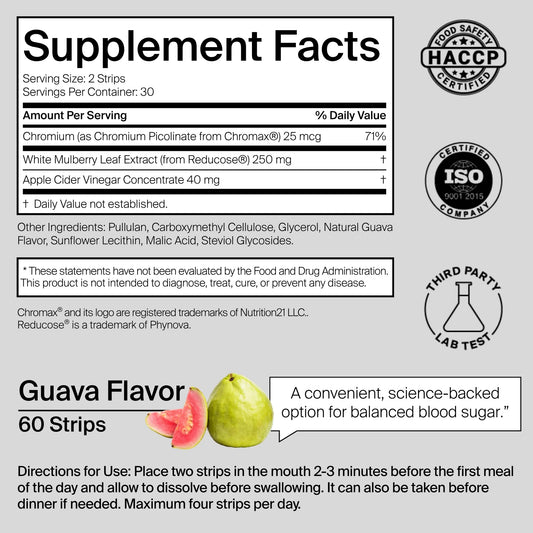
BIOSTRIPS® Glucose Support is designed for one specific moment: before a carbohydrate-containing meal. Each two-strip serving provides 250 mg of Reducose® white mulberry leaf extract standardized to 5% DNJ, 25 mcg of elemental chromium from Chromax®, and apple cider vinegar powder.
It is a sugar-free, vegan oral dissolving strip format. Take two strips two to three minutes before a carbohydrate-containing meal, according to the product directions. BIOSTRIPS® Glucose Support supports healthy carbohydrate metabolism and healthy blood sugar levels already within the normal range.*
This is not evidence that the finished product treats insulin resistance, menopause symptoms or a medical condition. Anyone using a glucose-affecting medicine, including insulin, sulfonylureas or metformin, or managing a complex health condition should discuss a new supplement with the clinician or pharmacist who knows their treatment plan.
*This statement has not been evaluated by the Food and Drug Administration. This product is not intended to diagnose, treat, cure, or prevent any disease.
When Should You Get Medical Input?
Talk with a clinician about new or worsening symptoms, a major unexplained body-composition change, persistent fatigue, recurrent dizziness, heavy bleeding, severe sleep disruption or concern about glucose. Ask what testing makes sense for your personal history rather than self-diagnosing from a social-media symptom list.
Menopause hormone therapy is an individualized medical decision. It should not be started solely as an insulin-resistance or weight-loss strategy. A menopause-informed clinician can help place symptoms, personal history and treatment options in context.
Frequently Asked Questions
Does perimenopause cause insulin resistance?
Perimenopause does not automatically cause insulin resistance. Hormonal changes can interact with sleep, body composition, activity and fat distribution, while genetics, diet, medication and health conditions also matter. Testing and medical assessment are needed to determine whether insulin resistance or diabetes is present.
Why does blood sugar seem different after 40?
Changes in estrogen, sleep, muscle, stress, body composition and daily movement can affect glucose regulation after 40. Symptoms alone cannot confirm abnormal glucose. Ask a clinician whether fasting glucose, A1C or other testing is appropriate.
What are the best foods for perimenopause?
Build meals around protein, non-starchy vegetables, beans, lentils, whole fruit, minimally processed whole grains, nuts, seeds and satisfying fats. Carbohydrates do not need to be eliminated. Pairing carbohydrates with protein, fiber and fat can create a more balanced meal.
What foods should I avoid during perimenopause?
No food must be banned solely because of perimenopause. Limit frequent sugar-sweetened drinks, refined baked goods, candy, low-fiber cereals and heavily processed snacks. Alcohol may worsen sleep or hot flashes for some people. Focus on patterns, portions and meal composition.
Can perimenopause change belly fat even if weight is unchanged?
Yes. The menopause transition can change fat distribution, including a greater tendency toward abdominal fat, even without a dramatic scale change. Resistance training, regular movement, sleep and individualized nutrition can support muscle and long-term metabolic health.
What supplements help with perimenopause blood sugar?
No supplement is universally best. Reducose® is an ingredient studied for meal-specific carbohydrate metabolism, berberine has broader but variable evidence and interaction concerns, and myo-inositol is most relevant to PCOS. Magnesium matters when intake or status is low. Review medicines and health conditions before starting a supplement.
Can saffron or L-theanine balance blood sugar in perimenopause?
Saffron and L-theanine should not be presented as established blood sugar ingredients. Affron® saffron has research for mood-related symptoms in perimenopausal women, while L-theanine is usually discussed for relaxation and sleep. That is different from directly improving glucose metabolism.
The Bottom Line
- Metabolism does not suddenly stop at 40.
- Perimenopause can intersect with sleep, muscle, cravings, body-fat distribution and insulin sensitivity.
- Emphasize protein, fiber-rich plants, minimally processed carbohydrates and satisfying fats.
- Limit frequent added sugars and highly refined foods without banning whole food groups.
- Resistance training, daily movement and sleep support are central to metabolic health.
- Use supplements for their actual evidence and intended role, not as a cure-all.
- Get medical input when symptoms or your history indicate testing or treatment may be needed.
This content is for educational purposes only and is not medical advice. Do not start, stop or change prescription medication or clinician-directed supplementation without appropriate medical guidance.
References
- Pontzer H, et al. Daily energy expenditure through the human life course. Science. 2021;373(6556):808-812.
- Lovejoy JC, et al. Increased visceral fat and decreased energy expenditure during the menopausal transition. International Journal of Obesity. 2008;32(6):949-958.
- Kapoor E, et al. Weight Gain in Women at Midlife: A Concise Review of the Pathophysiology and Strategies for Management. Mayo Clinic Proceedings. 2017;92(10):1552-1558.
- American Diabetes Association. Facilitating Positive Health Behaviors and Well-being to Improve Health Outcomes: Standards of Care in Diabetes. Diabetes Care.
- Thondre PS, et al. Mulberry leaf extract improves glycaemic and insulinaemic response to sucrose in healthy subjects. Nutrition & Metabolism. 2021;18:41.
- Thondre PS, et al. Different doses of Reducose® mulberry leaf extract after a complex meal. Nutrients. 2024;16(11):1670.
- National Center for Complementary and Integrative Health. In the News: Berberine.
- Jethaliya H, et al. Efficacy of Myo-inositol on Anthropometric, Metabolic, and Endocrine Outcomes in PCOS Patients: A Meta-analysis of Randomized Controlled Trial. Reproductive Sciences. 2022;29.
- NIH Office of Dietary Supplements. Magnesium Fact Sheet for Health Professionals.
- Lopresti AL, et al. The effects of a saffron extract affron® on menopausal symptoms in women during perimenopause: a randomized, double-blind, placebo-controlled study. Journal of Psychopharmacology. 2021.
About BIOSTRIPS®
BIOSTRIPS® is a category-defining brand in oral dissolving nutrient strips, founded in 2019 by Certified Nutritional Advisor Joanna Bacchus. A brand of Elsantis US Inc., BIOSTRIPS brought its first strips to market in 2022 and develops sugar-free, vegan formulations using clinically studied, branded ingredients. Learn more at joannabacchus.com.