12 Best Supplements for Women Over 40
The best-researched supplements for women over 40 are omega-3s (EPA/DHA), magnesium bisglycinate, vitamin D3 with K2, CoQ10 as ubiquinol, and a carb metabolism support supplement such as BIOSTRIPS®️ Glucose Support a dissolvable strip with Reducose®️ white mulberry leaf extract, Chromax®️ chromium picolinate, and apple cider vinegar, taken before a carb-containing meal. Rounding out the stack: rhodiola and schisandra for stress resilience, astaxanthin for skin, DIM for the body's normal estrogen metabolism, saffron extract for mood, capsaicin pre-meal, and a multi-strain probiotic. Below, what each one does, the published evidence behind it, dosing, and where it fits in a real day.
You wake up and check your phone. 6:47 a.m. You slept seven hours but feel like you got four. Your joints creak on the way to the coffee maker. By 3 p.m., you're staring at your laptop with the mental clarity of a fogged-up windshield. Someone in a Facebook group called it "the 40-something unraveling" and you felt that in your bones. You've tried drinking more water, cutting carbs, doing the 5 a.m. workout thing. Some of it helps. Most of it doesn't stick. And nobody handed you a manual for what your body actually needs right now.
Here's the version that's possible: waking up rested, steady energy across the day, skin that looks alive, and a body that feels like yours again. Not perfect. Just supported.
Key Takeaways
- Metabolism in your 40s doesn't crash the way wellness culture claims. The largest study to date, published in Science, found that total daily energy expenditure adjusted for fat-free mass stays broadly stable from age 20 to 60. What shifts is body composition and hormonal signaling not a broken metabolism.
- The right stack supports what your body is already doing. Targeted ingredients for carb metabolism, stress response, sleep, skin integrity, and cellular energy can help you feel more like yourself without overhauling your life.
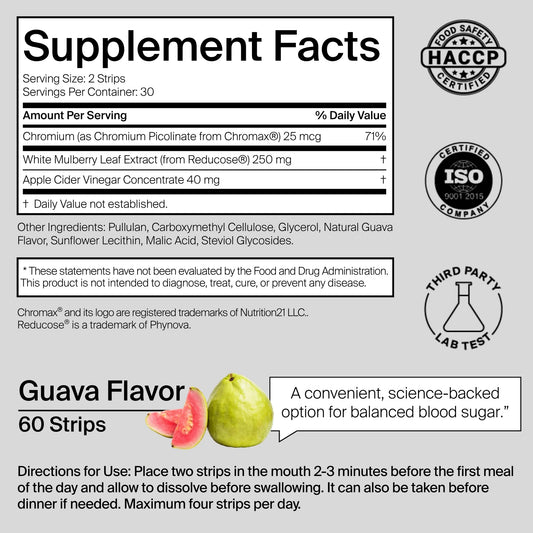
- BIOSTRIPS ®️ Glucose Support is the carb metabolism piece. A dissolvable strip with Reducose ®️ white mulberry leaf extract (250 mcg), Chromax ®️ chromium picolinate (25 mcg), and apple cider vinegar (40 mg), designed to support the body's natural ability to process carbohydrates. Two strips before a carb-heavy meal, and it takes up zero space in your routine.
What happens to your metabolism, skin, and energy after 40?
Your 40s are a biological renovation project, not a decline. The changes are real, but understanding them makes them manageable.
The best available evidence pushes back hard on the idea that metabolism collapses at 40. A 2021 study published in Science (Pontzer et al.) analyzed 6,421 people across 29 countries using the doubly labeled water method and found four distinct metabolic life stages with total daily energy expenditure, adjusted for fat-free mass, remaining stable through adulthood from roughly age 20 to 60. The measurable decline comes later, after 60.
So what actually shifts the experience for many women in their 40s? Three things intersecting: changing muscle-mass-to-fat ratios, fluctuating estrogen and progesterone, and a heightened stress response that affects sleep quality and cortisol patterning. This matters for your supplement strategy. The goal isn't to force metabolism upward with something stimulant-based. It's to support the systems that keep energy steady and skin healthy when hormones are in flux: carbohydrate processing, stress resilience, sleep depth, and cellular repair.
Why do these changes hit harder for women over 40?
Women in their 40s are running a metabolic and hormonal Rube Goldberg machine while also running careers, households, aging parents, and sometimes toddlers. Stress in midlife isn't just a mood problem; it reshapes digestion, sleep, skin, and how your body handles the pasta you ate at 8 p.m.
The specific moments where this shows up: the 3 p.m. energy crash that didn't exist at 32. The Saturday morning facial puffiness after two glasses of wine. The way your favorite jeans fit differently even though your workouts haven't changed. The 3 a.m. wide-awake-for-no-reason that leaves you depleted by breakfast. Women try the usual workarounds extra coffee, skipping breakfast, dry January, HIIT at 5 a.m. and find those levers don't pull the same way anymore.
How do carb metabolism, stress, and skin aging change after 40?
Three biological systems shift most noticeably in your 40s, and they're all connected: carbohydrate metabolism, the hypothalamic-pituitary-adrenal (HPA) axis that governs stress response, and the cellular repair mechanisms that determine how skin ages and energy holds.
Carbohydrate metabolism
Carbohydrate digestion runs through five stages, from the first bite to the moment glucose reaches your cells.

Figure 1. How carbohydrate digestion works, from mouth to cells.
| Stage | What happens |
|---|---|
| 1. Mouth | Chewing and salivary amylase begin breaking down starch |
| 2. Stomach | Mechanical digestion continues; minimal carbohydrate breakdown |
| 3. Small intestine | Enzymes break carbohydrates down into individual glucose molecules |
| 4. Bloodstream | Glucose is absorbed and carried to cells throughout the body |
| 5. Cells | Glucose is taken up and used for energy |
Table 1. Simplified illustration of carbohydrate digestion. Individual results may vary.
Glucose enters the bloodstream via SGLT1 and GLUT2 transporters, and insulin then signals cells to take it up for energy or storage. This system works well in a vacuum, but estrogen influences insulin sensitivity and fluctuating estrogen in perimenopause means some days your body handles the same meal differently than others.
The HPA axis and stress
Cortisol follows a diurnal rhythm high in the morning, tapering through the day, low at night. Chronic stress flattens that curve, and a flatter cortisol slope has been associated in published research with poorer sleep quality and greater abdominal fat accumulation in midlife women.
Skin aging and cellular energy
After 40, collagen synthesis declines, and oxidative stress from UV exposure and normal metabolism accumulates faster than repair mechanisms can clear it. Coenzyme Q10, a key player in mitochondrial ATP production, also declines with age which is part of why it shows up on so many midlife supplement lists.
These three systems carb metabolism, stress, cellular repair are where the right supplements can be genuinely supportive.
One important caveat: individual variation matters enormously. A landmark 2015 Cell study (Zeevi et al.) continuously monitored glucose in 800 people across 46,898 meals and found high variability in how different people respond to identical food. What works for your friend may not work for you. Supplements are inputs, not guarantees.
How does BIOSTRIPS ®️ Glucose Support fit into your day?
BIOSTRIPS®️ Glucose Support is a sugar-free, vegan dissolvable strip formulated with Reducose®️ white mulberry leaf extract (250 mcg), Chromax®️ chromium picolinate (25 mcg), and apple cider vinegar (40 mg). The strip dissolves on your tongue. no water, no pill to swallow, no powder to mix and is designed to support your body's natural ability to process carbohydrates when taken before a carb-containing meal. If you want the mechanics of the delivery format itself, we covered it in our guide to oral dissolving supplements.
What makes the strip format different from pills or powders for a woman in her 40s: it fits in a jeans pocket, a clutch, or a desk drawer. It doesn't add to the five other pills you might already take. It doesn't require planning ahead. You can take it when the moment calls before the pasta at dinner, before the bagel at the morning meeting, before the pizza your kid insisted on.
"When we developed BIOSTRIPS®️, the women we talked to kept saying the same thing: 'I know what I should do, but my life doesn't always cooperate.' The strip was designed for that gap for the meal that's happening now, not the meal you planned three days ago."
— Joanna Bacchus, Certified Nutritional Advisor and Founder, BIOSTRIPS®️
A note on medications: if you take insulin, metformin, sulfonylureas, or any other medication that affects blood sugar, talk to your healthcare provider before adding a carb metabolism support supplement. The same applies to thyroid medication, blood thinners, and hormonal therapies several supplements on this list, including DIM, vitamin K2, and omega-3s, can interact with them. This article is general information, not medical advice.
These statements have not been evaluated by the Food and Drug Administration. This product is not intended to diagnose, treat, cure, or prevent any disease.
What are the 12 best supplements for women over 40?
Here's the complete list, organized by when you'd take them in a real day. Each one earned its spot through published research, not trend cycles.
Pre-Meal Support
1. BIOSTRIPS ®️ Glucose Support
The carb metabolism piece, and the one most women in their 40s are missing. Take two strips 5–10 minutes before a carb-containing meal: dinner, lunch, or whenever your day throws carbs at you. Reducose®️ is a patented white mulberry leaf extract standardized for DNJ content, studied in human trials for its role in supporting post-meal glucose response; Chromax®️ chromium picolinate supports healthy insulin function; and apple cider vinegar supports healthy carbohydrate metabolism. The strip format means you can take it exactly when you need it no water, no pre-planning. This is the supplement that bridges the gap between "I know what's good for me" and "this is what my real life looks like today." Shop BIOSTRIPS®️ Glucose Support →
2. Cayenne Pepper (Capsaicin)
Capsaicin, the active compound in cayenne, supports thermogenesis and may help promote feelings of fullness when taken before a meal. A 2014 meta-analysis in Appetite (Whiting et al.) pooled 8 studies covering 191 participants and found capsaicinoid intake before a meal reduced ad libitum energy intake by roughly 74 calories. Think of it as a pre-meal satiety signal rather than a fat burner. Take it 20–30 minutes before your largest meal. Typical dose: 2–6 mg capsaicinoids.
Morning Stack
3. Omega-3 Fatty Acids (EPA/DHA)
Omega-3s are among the most-studied supplements for cardiovascular health, and also support cognitive function and skin hydration. A 2019 meta-analysis in the Journal of the American Heart Association (Hu, Hu & Manson) pooled 13 randomized controlled trials covering 127,477 participants and found marine omega-3 supplementation associated with modest reductions in several cardiovascular outcomes, including myocardial infarction and coronary heart disease death. Worth knowing: this area is genuinely contested, and other large meta-analyses have found no significant benefit. Typical dose: 1,000–2,000 mg combined EPA/DHA.
4. Coenzyme Q10 (Ubiquinol)
CoQ10 is essential for mitochondrial ATP production and functions as a lipid-soluble antioxidant. Levels decline with age, and small trials have looked at supplementation for both skin appearance and subjective fatigue. Ubiquinol is the more bioavailable form for women over 40. Typical dose: 100–200 mg ubiquinol.
5. Astaxanthin
A carotenoid from microalgae, astaxanthin is a potent antioxidant with particular affinity for skin and eye tissue. In an often-cited 2012 study in Acta Biochimica Polonica (Tominaga et al.), 30 healthy women combining 6 mg daily oral astaxanthin with topical application over 8 weeks showed improvements in crow's feet wrinkles, elasticity, skin texture, and age spot size. Note the design: it was open-label and uncontrolled, and combined oral with topical, so treat it as suggestive rather than definitive. Typical dose: 4–12 mg.
6. DIM (Diindolylmethane)
DIM is a compound formed when the body digests indole-3-carbinol, found in cruciferous vegetables. It supports the body's natural pathways for healthy estrogen metabolism, specifically the 2-hydroxylation pathway. Language matters here: DIM supports the body's normal estrogen metabolism processes. It does not "balance hormones" in any clinical sense. Typical dose: 100–200 mg.
7. Schisandra Chinensis
An adaptogenic berry used in Traditional Chinese Medicine, schisandra supports the body's stress response without sedation. It's a morning adaptogen, promoting resilience rather than calm. The clinical literature is thinner than for rhodiola, so set expectations accordingly. Typical dose: 500–1,000 mg extract (standardized to schisandrins).
8. Rhodiola Rosea
Rhodiola is one of the better-researched adaptogens for fatigue. A systematic review in Phytomedicine (Hung, Perry & Ernst, 2011) assessed 11 randomized clinical trials and found some evidence for benefit in physical and mental performance and fatigue, while noting methodological limitations across the included studies. Best taken in the morning late-day dosing can interfere with sleep in sensitive individuals. Typical dose: 200–400 mg extract (standardized to 3% rosavins, 1% salidroside).
9. Vitamin D3 + K2
Vitamin D status is relevant to bone density, immune function, and mood all areas of concern in the 40s, and insufficiency is common among U.S. adults. Adding K2 supports calcium partitioning, directing calcium toward bone rather than soft tissue. Evidence on whether supplementation reduces fracture risk in people who aren't deficient is genuinely mixed, so the strongest case for supplementing is correcting a measured insufficiency rather than dosing blind. Typical dose: 2,000–4,000 IU D3 + 100–200 mcg K2 (MK-7).
Evening Stack
10. Magnesium Bisglycinate
Magnesium is a cofactor in hundreds of enzymatic reactions, including those involved in GABA receptor function and sleep regulation. A 2012 double-blind placebo-controlled trial in the Journal of Research in Medical Sciences (Abbasi et al.) gave 46 older adults magnesium or placebo for 8 weeks and reported improvements in insomnia severity scores, sleep efficiency, and sleep time. Later systematic reviews have been more cautious, placing the true effect somewhere between modest benefit and none. Bisglycinate is the form most associated with tolerability it's chelated to glycine, absorbs well, and is far less likely than magnesium oxide to cause loose stools. Typical dose: 200–400 mg elemental magnesium before bed.
11. Affron® (Saffron Extract)
Affron® is a standardized saffron extract (Crocus sativus) with published research on mood and stress. A 2017 double-blind, randomized, placebo-controlled trial in Complementary Therapies in Medicine (Kell et al.) found that 28 mg/day over 4 weeks reduced tension, stress, and low mood scores and increased vigour in adults self-reporting low mood. It's non-sedating, but the stress-buffering effect makes it a logical evening addition it supports the wind-down rather than inducing drowsiness. Typical dose: 28 mg standardized saffron extract.
12. Probiotics (Lactobacillus and Bifidobacterium Strains)
Gut microbiome diversity declines with age, and perimenopausal hormonal shifts can alter gut permeability and composition. The research here is still emerging strain specificity matters enormously, and blanket "probiotics are good for you" claims oversell the evidence. Typical dose: multi-strain formula with 10–50 billion CFU.
What does a full daily supplement routine look like?
This is what the stack looks like mapped to a real day for a woman in her 40s not an influencer's aspirational morning, but something you can actually do.

Figure 2. A sample daily supplement schedule for women over 40.
| Time | What you take | Why then |
|---|---|---|
| 7:00 a.m. | Omega-3s, CoQ10, astaxanthin, DIM, schisandra, rhodiola, vitamin D3 + K2 | Take with a small amount of food fat-soluble nutrients absorb better with dietary fat |
| 12:10 p.m. | Cayenne (capsaicin) | 20–30 minutes before your largest meal, for pre-meal satiety |
| 12:25 p.m. | BIOSTRIPS ®️ Glucose Support (two strips) | 5–10 minutes before a carb-heavy lunch |
| 3:00 p.m. | Nothing new | The afternoon lull. The morning adaptogens are still working; the energy curve is less jagged |
| 6:50 p.m. | BIOSTRIPS ®️ Glucose Support (two strips) | Before dinner, if dinner is the carb-heavy meal |
| 9:30 p.m. | Magnesium bisglycinate, Affron®, probiotics | Supports sleep onset and deeper sleep architecture |
| 10:30 p.m. | Asleep | And ideally staying asleep through 3 a.m. |
Table 2. Sample daily supplement schedule for women over 40.
Supplement Formats Compared: Strips, Capsules, Powders, and Liquids

Figure 3. Supplement formats compared
Among dissolving strips, the differentiator is what's inside. BIOSTRIPS®️ Glucose Support is built on clinically studied Reducose®️ white mulberry leaf extract and Chromax®️ chromium picolinate covered in detail above.
What should you know before building a supplement stack?
- Start with blood work, not an Amazon cart. Before adding anything, know your vitamin D status, iron, B12, and thyroid panel. Supplementing blind means you might miss what you actually need and spend money on what you don't. A $100 lab panel is worth more than $100 in supplements you don't need.
- Add one thing at a time. Introduce a new supplement, wait two weeks, observe how you feel, then add the next. If you start six things at once and feel better or worse, you won't know which one did what.
- Supplements support habits; they don't replace them. The woman who gets 7+ hours of sleep, eats protein at breakfast, and walks 20 minutes after lunch will get more from her stack than the woman who takes the same stack on five hours of sleep and sporadic meals. Supplements amplify good inputs.
- Form matters as much as ingredient. Magnesium oxide is cheap but poorly absorbed and tends to cause digestive upset. Magnesium bisglycinate is well-absorbed, well-tolerated, and worth the price difference. CoQ10 as ubiquinol is meaningfully more bioavailable than ubiquinone after 40. Don't buy the cheapest version of a good ingredient.
- Some supplements compete for absorption. Calcium and magnesium compete. Iron and calcium compete. Fat-soluble nutrients (A, D, E, K, CoQ10, astaxanthin) need dietary fat take them with a meal that contains some, not with black coffee on an empty stomach.
- More is not better. Doubling your rhodiola won't double your stress resilience. Supra-physiological doses of anything, even water, become problematic. Stick to studied dose ranges.
- Your metabolism isn't broken; it's responding to a different hormonal landscape. The language you use about your body matters. You're not fighting your metabolism or forcing it upward with stimulants. You're supporting the systems that let it work the way it was designed to work.
- Talk to your doctor if something feels wrong. A supplement stack is not a diagnostic tool. If you have persistent fatigue, unexplained weight changes, heavy or irregular bleeding, or other symptoms that concern you, see your doctor.
Which carb metabolism supplement is worth buying?
If you're adding one thing to your routine and the 3 p.m. crash is your main complaint, start with carb metabolism support and buy on the ingredient, not the format.

Figure 4. BIOSTRIPS ®️ Glucose Support dissolvable strip.
Most products in this category use unstandardized mulberry leaf powder at an unstated dose. BIOSTRIPS®️ Glucose Support uses Reducose®️, a patented white mulberry leaf extract from Phynova standardized to a verified DNJ range and studied in human clinical trials including a 2021 double-blind crossover trial at Oxford Brookes University and a 2024 dose-ranging trial published in Nutrients, both examining post-meal glucose and insulin responses. It's paired with Chromax®️ chromium picolinate from Nutrition 21, which supports healthy insulin function, plus apple cider vinegar. Branded, standardized ingredients with a documented dose behind them which is not true of most of the category.
The format matters second. The strip dissolves on your tongue in seconds, needs no water, and fits in a pocket. For a woman already managing five other capsules, that's the difference between taking it before the meal that's actually happening and remembering it afterward. It's also sugar-free, vegan, and HSA/FSA eligible for qualifying customers.
Shop BIOSTRIPS ®️ Glucose Support →
Frequently Asked Questions
What supplements should a woman over 40 take daily?
A well-rounded daily stack for women over 40 typically includes omega-3s for cardiovascular and skin support, magnesium bisglycinate for sleep, vitamin D3 + K2 for bone health, and CoQ10 for cellular energy. Adding a carb metabolism support supplement such as BIOSTRIPS®️ Glucose Support before carb-heavy meals, plus adaptogens like schisandra and rhodiola for stress resilience, creates a comprehensive foundation. The specific stack should reflect your individual needs, ideally informed by blood work and how you actually feel day to day.
Does metabolism really slow down at 40?
Less than most people think. A 2021 Science study (Pontzer et al.) analyzed 6,421 people across 29 countries and found that total daily energy expenditure, adjusted for fat-free mass, stays broadly stable from age 20 to 60, with the measurable decline arriving after 60. What changes more noticeably in your 40s is body composition muscle-to-fat ratio and how efficiently your body processes carbohydrates when estrogen levels fluctuate.
What is the best supplement for energy after 40?
There is no single best, because energy after 40 is a multi-system issue. CoQ10 supports mitochondrial ATP production. Rhodiola rosea supports mental energy under stress. Magnesium bisglycinate supports sleep quality, which directly affects daytime energy. And BIOSTRIPS®️ Glucose Support helps support steady post-meal energy by supporting the body's natural carb processing. The combination tends to work better than any one supplement alone.
Can supplements help with perimenopause symptoms?
Certain supplements may support the body during perimenopause, but they support normal physiological function they aren't designed to address a diagnosed medical condition. Magnesium bisglycinate may help with sleep quality. DIM supports the body's healthy estrogen metabolism pathways. Affron® saffron extract has published evidence for stress and mood support. These are structure/function roles. If you are experiencing disruptive symptoms, speak with your healthcare provider about evidence-based options.
Is DIM safe for women over 40?
DIM is generally well tolerated at doses of 100–200 mg per day for most women, and it supports the body's natural 2-hydroxylation pathway for estrogen metabolism. However, DIM is not appropriate for everyone. Women with a history of estrogen-sensitive conditions, those taking hormonal therapies, and those who are pregnant or breastfeeding should consult their doctor before taking DIM. Start low and monitor how you feel.
When should I take BIOSTRIPS ®️ Glucose Support?
Take two strips 5–10 minutes before a carb-containing meal, typically lunch or dinner, or whenever your largest carbohydrate intake occurs. The strips dissolve on your tongue in seconds, with no water needed, which makes them easy to use exactly when the meal happens, not when you planned the meal.
What's the difference between magnesium bisglycinate and other forms of magnesium?
Magnesium bisglycinate is magnesium bound to the amino acid glycine. This chelated form has higher bioavailability than magnesium oxide and is significantly less likely to cause digestive upset or loose stools a common complaint with cheaper forms. Glycine itself also has calming properties, which makes magnesium bisglycinate a strong choice for evening use and sleep support.
Do I need all 12 supplements?
No. This list is a research-backed menu, not a prescription. Start with the areas where you feel the most difference from where you'd like to be energy, sleep, stress, skin, post-meal slump and add one or two supplements that target those areas. Give them 2–4 weeks before evaluating. A smaller stack taken consistently outperforms a larger stack taken sporadically.
More questions about the strips? See our full FAQ, or read our guide to steady energy and balanced blood sugar.
The Bottom Line
Your 40s aren't something to fight. They're something to support. Your body is navigating a hormonal and metabolic transition that's biologically normal, even when it doesn't feel normal day to day. The right supplement stack gives your systems the substrates they need to do their job well: steady energy across the day, sleep that actually restores, skin that reflects vitality, and a metabolism that feels resilient rather than sluggish.
BIOSTRIPS®️ Glucose Support is the carb metabolism piece of that puzzle a dissolvable strip with Reducose®️ white mulberry leaf extract, Chromax®️ chromium picolinate, and apple cider vinegar that fits into the cracks of a real, unglamorous, sometimes chaotic life. No water, no planning, just support when the carbs show up.
The rest of the stack omegas, magnesium, adaptogens, CoQ10, astaxanthin, DIM rounds out the picture. Not all 12 will be right for you, and that's the point: you build what serves your body, not what someone else's checklist says.
If something feels persistently off fatigue that doesn't lift, brain fog that interferes with your work, changes in your cycle that concern you start with your doctor, not a supplement aisle. Supplements support. They don't diagnose.
Try BIOSTRIPS ®️ Glucose Support →
These statements have not been evaluated by the Food and Drug Administration. This product is not intended to diagnose, treat, cure, or prevent any disease.
Reducose ®️ is a registered trademark of Phynova Group Ltd. Chromax ®️ is a registered trademark of Nutrition 21, LLC. Affron® is a registered trademark of Pharmactive Biotech Products.
About This Article
This article was written by Joanna Bacchus, Certified Nutritional Advisor and Founder of BIOSTRIPS®️, and last reviewed in July, 2026. It cites 10 peer-reviewed studies, each linked below. The article is reviewed annually and updated when new evidence warrants.
Sources
- Pontzer H, et al. Daily energy expenditure through the human life course. Science. 2021;373(6556):808–812.
- Zeevi D, et al. Personalized nutrition by prediction of glycemic responses. Cell. 2015;163(5):1079–1094.
- Hu Y, Hu FB, Manson JE. Marine omega-3 supplementation and cardiovascular disease: an updated meta-analysis of 13 randomized controlled trials involving 127,477 participants. J Am Heart Assoc. 2019;8(19):e013543.
- Tominaga K, et al. Cosmetic benefits of astaxanthin on human subjects. Acta Biochim Pol. 2012;59(1):43–47.
- Hung SK, Perry R, Ernst E. The effectiveness and efficacy of Rhodiola rosea L.: a systematic review of randomized clinical trials. Phytomedicine. 2011;18(4):235–244.
- Abbasi B, et al. The effect of magnesium supplementation on primary insomnia in elderly: a double-blind placebo-controlled clinical trial. J Res Med Sci. 2012;17(12):1161–1169.
- Kell G, et al. affron® a novel saffron extract (Crocus sativus L.) improves mood in healthy adults over 4 weeks: a double-blind, parallel, randomized, placebo-controlled clinical trial. Complement Ther Med. 2017;33:58–64.
- Whiting S, Derbyshire E, Tiwari B. Could capsaicinoids help to support weight management? A systematic review and meta-analysis of energy intake data. Appetite. 2014;73:183–188.
- Thondre PS, et al. White mulberry leaf extract and glycaemic and insulinaemic responses to sucrose: a double-blind, randomised, placebo-controlled crossover trial.
- Thondre PS, et al. Understanding the impact of different doses of Reducose ®️ mulberry leaf extract on blood glucose and insulin responses after eating a complex meal: results from a double-blind, randomised, crossover trial. Nutrients. 2024;16(11):1670.
About BIOSTRIPS ®️
BIOSTRIPS®️ is a category-defining brand in oral dissolving nutrient strips, founded in 2019 by Certified Nutritional Advisor Joanna Bacchus. A brand of Elsantis US Inc., BIOSTRIPS®️ brought its first strips to market in 2022 and develops sugar-free, vegan formulations using clinically studied, branded ingredients. Learn more at joannabacchus.com.